
Queens & Co. Event Insights · Planning Guides
Corporate Event Planning in Delhi NCR: 12 Decisions That Shape a Successful Event
A successful corporate event rarely begins with décor, entertainment or a venue shortlist. It begins with clarity: why the event exists, who it must serve and what guests should understand, feel or do when it ends.
That clarity matters even more when managing corporate event planning in Delhi NCR. Guests may be arriving from different parts of Delhi, Gurugram, Noida and beyond. A venue can look ideal during a site visit but create complications around access, production loading, parking or guest movement. A programme can appear strong on paper but feel disjointed if registration, transitions, hospitality and technical cues have not been designed as one experience.
The most effective events are therefore not a collection of separate arrangements. They are coordinated systems in which the brief, budget, venue, content, production, vendors and guest journey all support the same outcome.
This guide explains the twelve decisions that should be made before event day—and the questions that help each decision become more useful.
Why corporate event planning in Delhi NCR needs local operational thinking
Delhi NCR is not one uniform event market. A guest list can include people travelling between Delhi, Gurugram, Noida, Faridabad and locations further away. The venue, event timing and transport plan therefore need to be assessed together rather than as separate decisions.
Production teams may also need access long before guests arrive. Loading routes, setup windows, service lifts, parking, security procedures and dismantling deadlines can materially affect what is practical inside a venue. Outdoor or partially outdoor formats need a suitable alternative for seasonal heat, rain, cold or poor weather—not only a last-minute promise that a backup will be arranged.
Local operational thinking means testing the plan against the real movement of guests, vendors, equipment and venue teams. It helps ensure that the creative idea can be delivered safely, on time and without placing unnecessary friction in the guest journey.
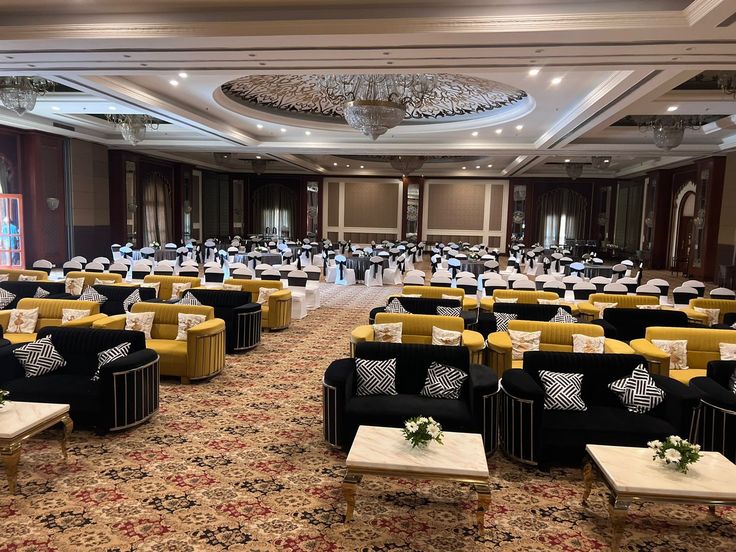
In brief: what makes a corporate event work?
A well-planned corporate event connects six things:
- A clear business objective
- A defined audience
- A realistic budget and timeline
- A venue that works operationally as well as visually
- A considered guest journey
- A coordinated production and delivery plan
When these elements are decided early, creative ideas become easier to evaluate and event-day teams can work with greater calm.
1. Define the business outcome before discussing the format
Start with the reason for bringing people together.
“We are organising an annual event” is a description, not an objective. A useful objective explains what the organisation wants to change or achieve. The event may need to:
- Align a leadership team around a new direction
- Introduce a product to customers, partners or the media
- Strengthen relationships with dealers or channel partners
- Recognise employee performance
- Build participation across a distributed workforce
- Create qualified conversations around a brand or offering
The objective becomes the filter for later decisions. If leadership alignment is the priority, the format needs space for attention, discussion and reflection. If the purpose is a product launch, the reveal, demonstration, media experience and post-event content may carry more weight.
Before moving forward, complete this sentence:
This event will be successful if our guests leave understanding, feeling or doing ________.
That statement should be specific enough to guide the brief and simple enough for every vendor and internal stakeholder to understand.
2. Decide exactly who the event is for
Audience definition affects almost every part of the plan: date, venue, invitation language, session length, hospitality, accessibility, entertainment and follow-up.
Avoid describing the audience only as “employees,” “clients” or “partners.” Build a more useful picture:
- Where will they travel from?
- Are they senior decision-makers, working teams or a mixed audience?
- How familiar are they with the subject?
- Will they attend by choice or as part of work?
- What questions or concerns are they likely to bring?
- Do any guests require assisted access, dietary support or language consideration?
- What would make the day feel worth their time?
For mixed audiences, identify where experiences need to separate. Media may require a briefing area. Speakers need a green room and technical support. VIP guests may need a different arrival protocol without making the broader audience feel secondary.
Good hospitality begins with understanding these differences before the floor plan is created.
3. Choose the format only after the objective and audience are clear
The format should serve the outcome, not simply repeat what was done last year.
A conference, leadership summit, dealer meet, product launch, award night, exhibition, employee celebration and brand activation each create a different rhythm. Some events need a single focused room. Others benefit from breakouts, demonstrations, networking areas or a sequence of environments.
Ask:
- Does the event need guests to listen, participate, connect or take action?
- Should the programme feel formal, conversational, celebratory or high-energy?
- Is a half-day experience sufficient, or does the objective require a full day?
- Would one central stage work, or are smaller sessions more useful?
- What should happen in person that could not be achieved through an email or video call?
That final question is particularly valuable. An in-person event should use the advantages of presence: attention, conversation, demonstration, shared emotion and human connection.
4. Build a working budget with priorities, not one undivided figure
A useful event budget is a decision-making tool. It should show where money is expected to go, what is essential and which elements can change if circumstances shift.
Typical planning lines may include:
- Venue hire and associated venue services
- Food and beverage
- Stage, sound, lighting, LED and technical production
- Set, branding and environmental graphics
- Furniture and guest amenities
- Registration and guest-management systems
- Entertainment, speakers or performers
- Photography, video and post-event content
- Staffing, security, transport and logistics
- Licences, permissions or specialist support where applicable
- Agency planning and management fees
- Contingency
Separate “must work” investments from “would be valuable” enhancements. Clear priorities protect the core experience when quotes change or new requirements appear.
Keep a contingency amount rather than allocating every rupee at the beginning. Events contain variables: revised guest counts, additional technical requirements, extended venue hours, weather protection or late stakeholder requests.
5. Select the date and venue through an operational lens
Venue selection is often treated as a visual decision. In practice, the most important questions are operational.
For events across Delhi NCR, assess travel patterns and realistic arrival times for the intended audience. A location that suits a leadership group travelling from Gurugram may not work equally well for guests coming from Noida or central Delhi. Date and timing should be considered together with weekday traffic, airport or railway transfers and the expected duration of the programme.
During a site visit, check:
- Guest approach, drop-off, parking and entry
- Registration and queue space
- Production loading access and permitted setup hours
- Ceiling height, rigging conditions and stage sightlines
- Power availability and backup arrangements
- Sound limitations and neighbouring spaces
- Internet reliability where connectivity is essential
- Green rooms, speaker holding and backstage circulation
- Washrooms, assisted access and service routes
- Catering movement and replenishment
- Outdoor weather alternatives
- The venue’s closing, dismantling and handover requirements
A venue is suitable only when it supports the guest experience and the work required to create it.
6. Design the guest journey from invitation to departure
Guests experience an event as a continuous sequence. They do not separate registration, décor, content, food and entertainment into vendor categories. They simply notice whether the day feels clear, welcoming and worth their attention.
Map the journey in order:
- Invitation or announcement
- Registration and confirmation
- Pre-event reminders
- Travel and arrival
- Entry, security and check-in
- Welcome and orientation
- Main programme and transitions
- Breaks, hospitality and networking
- Closing moment
- Departure and follow-up
For each stage, ask what the guest needs to know, where uncertainty may arise and who owns the solution.
Small decisions have disproportionate influence. Clear arrival instructions can reduce calls on the day. Adequate check-in positions can prevent the event from beginning with a queue. Thoughtful signage can remove the need for guests to keep asking for directions. A planned closing and departure can preserve the experience after the formal programme ends.
7. Build the programme as a rhythm, not a list of agenda items
A programme needs pace. Long presentations, repeated speaker formats and slow transitions reduce attention even when the content is important.
Review the agenda from the audience’s perspective:
- How long are guests expected to listen without a change of format?
- Where should participation or discussion occur?
- Are breaks positioned when people will actually need them?
- Can speakers make the same point more clearly in less time?
- What needs to happen on stage during every transition?
- Is there enough time for networking if relationships are an objective?
Translate the approved agenda into a detailed show flow. This working document should include timing, stage action, speaker movement, presentation files, lighting states, sound cues, video playback, microphones and the team member responsible for each cue.
The public agenda tells guests what will happen. The show flow tells the delivery team how it will happen.
8. Plan technical production around the content
Production should make the message easier to receive. A large LED wall or dramatic lighting design is useful only when it serves the room, content and audience.
Technical planning should consider:
- Stage dimensions and viewing angles
- Screen size, format and presentation resolution
- Microphone requirements for presenters, panels and audience questions
- Lighting for both the live room and recorded content
- Audio coverage across the complete guest area
- Playback systems and backup files
- Speaker confidence monitors or teleprompters where needed
- Power distribution and redundancy
- Recording, live streaming or remote participation
- Rehearsal time
Ask presenters for final content before the event and create a clear naming and version-control process. Last-minute decks are common, but an agreed deadline gives the technical team time to check fonts, videos, aspect ratios, audio and playback.
A full rehearsal is not an optional performance extra. It is how teams identify unclear cues, unrealistic timings, missing assets and stage-movement problems while there is still time to correct them.

9. Create one visual system across every touchpoint
Branding should feel consistent without making every surface carry a logo.
Begin with a visual system that defines colour, type, image direction, layout principles and the hierarchy of information. Apply it across the invitation, registration page, entry, signage, stage, screens, badges, presentation templates and post-event communication.
The strongest environments usually establish a few deliberate focal moments instead of spreading the budget across many unrelated decorative elements.
Before approving any branded element, ask:
- Does it help guests understand where they are or what to do?
- Does it strengthen the central message?
- Will it be visible at the correct distance and lighting level?
- Is it placed where people will naturally encounter it?
- Does it photograph well without interfering with the live experience?
This approach keeps the event recognisable and composed rather than visually crowded.
10. Define vendor responsibilities and one decision path
Events become difficult when several capable teams are working without a shared structure.
Create a responsibility matrix covering the venue, production partner, fabricator, caterer, registration team, entertainment, photographer, security, transport and internal stakeholders. Each critical task needs one clear owner, even when several people contribute.
Confirm:
- Scope and deliverables
- Submission and approval deadlines
- Site access and production schedules
- Contact details and escalation order
- Dependencies between vendors
- Health, safety and venue requirements
- Setup, testing, show and dismantling responsibilities
- Payment and change-approval processes
One central planning team should maintain the master timeline and communicate approved changes. This prevents conflicting instructions and protects teams from making expensive assumptions.
Organisations looking for coordinated support can review Queens & Co.’s approach to corporate, MICE and brand experience management.
11. Prepare for what may change
Contingency planning is not pessimism. It is how an event team protects the guest experience when conditions change.
Build plans for the risks most relevant to the event, such as:
- Outdoor weather changes
- Speaker delay or cancellation
- Increased or reduced guest attendance
- Presentation or playback failure
- Power or connectivity interruption
- Delayed production material
- Medical support or guest assistance
- Transport disruption
- A programme running ahead of or behind time
Each plan should answer three questions:
- What is the trigger for using the alternative plan?
- Who has the authority to make that decision?
- How will the change be communicated to the team and guests?
Backups are useful only when people know where they are, who can activate them and how the revised plan affects every department.
12. Decide how the event will be measured and followed up
Measurement should return to the objective established at the beginning.
Depending on the event, useful indicators may include:
- Registrations, attendance and arrival patterns
- Session participation or completion
- Meetings, demonstrations or qualified conversations
- Employee or partner feedback
- Content engagement after the event
- Media outcomes
- Sales or relationship follow-up
- Operational observations from the delivery team
Collect only information that will be used. A short, focused feedback form often produces more useful responses than a long generic survey.
Hold an internal debrief soon after the event. Record what worked, what caused pressure, what guests asked and what should change next time. Those observations are valuable planning assets for the next experience.
A practical corporate event planning timeline
The right lead time depends on scale, venue demand, production complexity and the number of decision-makers. Complex events should begin earlier. Use this as a planning framework rather than a fixed rule.
| Planning stage | Priority decisions |
|---|---|
| Initial planning | Objective, audience, format, working budget, date options and decision-makers |
| Venue and partner confirmation | Site visits, venue hold, production feasibility, key vendors and master schedule |
| Experience development | Guest journey, programme, creative direction, content, registration and hospitality |
| Production development | Floor plans, stage and technical design, branding artwork, vendor coordination and risk review |
| Final preparation | Confirmed guest data, show flow, presentation files, team briefing, rehearsal and contingency checks |
| Event day | Command structure, cue management, guest experience, issue escalation and documentation |
| After the event | Guest communication, content delivery, measurement, reconciliation and debrief |
When should you appoint a corporate event planner in Delhi NCR?
An event partner becomes especially valuable when the project includes several stakeholders, a high guest count, complex production, multiple vendors, a short planning window or a programme in which timing and brand reputation matter.
Appointing the planning team before the venue and major vendors are confirmed allows operational questions to be considered earlier. It can also prevent a visually appealing choice from creating unnecessary production or guest-management difficulties later.
When evaluating an event management partner, ask how they approach:
- Brief development and budget control
- Venue assessment
- Guest journey and hospitality
- Production planning
- Vendor coordination
- Show calling and on-ground management
- Contingency planning
- Post-event closure
Look for a team that asks precise questions before presenting ideas. Good event planning is visible in the final environment, but it begins in the quality of the decisions made much earlier.
You can also explore selected Queens & Co. experiences and learn more about the team and its approach.
Frequently asked questions
How early should a corporate event be planned?
Begin as early as the event’s scale and complexity require. Venue availability, leadership calendars, production design, guest travel and content approvals can all affect the timeline. A smaller internal event may need a shorter runway, while a large conference, dealer meet, launch or award night should begin considerably earlier.
What should be included in a corporate event budget?
Include the venue, food and beverage, technical production, stage and branding, registration, entertainment or speakers, content capture, staffing, security, transport, permissions where needed, professional fees and contingency. The exact structure should reflect the format rather than using a generic percentage split.
How do you choose a corporate event venue in Delhi NCR?
Consider where guests are travelling from, realistic arrival time, venue access, parking, production loading, setup hours, stage sightlines, power, sound, internet, backstage space, hospitality movement, assisted access and weather alternatives. The venue should work operationally as well as visually.
What does a corporate event management company handle?
Scope varies, but end-to-end support can include brief development, budgeting, venue assessment, creative direction, production, vendor coordination, guest management, hospitality, rehearsals, show calling, on-ground delivery and post-event closure. Confirm the exact responsibilities in writing before work begins.
How can a company measure whether an event was successful?
Measure the outcome established in the brief. Relevant indicators might include attendance, participation, qualified conversations, employee or partner feedback, content engagement, media results, follow-up activity and lessons from the operational debrief.
Plan the experience before planning the decoration
The most memorable corporate events feel effortless to guests because the difficult decisions have already been made. Objectives are clear. Teams understand their roles. The venue supports the plan. Content and production work together. Guests always know where to go and what happens next.
That sense of ease is not accidental. It is the result of considered planning.
If you are beginning corporate event planning in Delhi NCR, start a conversation with Queens & Co. Events. Share the objective, audience, intended date and what success needs to look like; the right event format can be built from there.